Habit Appliances in Cincinnati: How to Stop Thumb Sucking Before It Affects Your Child's Smile
If your child is still sucking their thumb past age five or six, it may be time to talk to an orthodontist. A habit appliance is a small, pain-free device that fits behind your child’s teeth and gently breaks the habit — usually within a few weeks. At Haverkos Family Orthodontics, Dr. Stephen Haverkos offers custom habit appliances for kids at both our Bridgetown and Harrison offices.
Find What You’re Looking For
- Is my child’s thumb sucking a problem?
- What does a habit appliance actually do?
- What happens if we don’t address it?
- What’s the process like at our office?
- How much does it cost?
- Is my child the right age for treatment?
Your Child Still Sucks Their Thumb — And You’re Not Sure What to Do
You’ve tried the gentle reminders. You’ve tried the reward charts. You may have even tried that bitter-tasting nail polish. And your kid is still sucking their thumb.
You’re not alone — and you’re not failing as a parent. Thumb sucking is one of the most natural self-soothing behaviors kids develop, starting before they’re even born.
Most children outgrow it on their own between ages two and four. But for some kids, the habit sticks around longer than expected, and that’s when Cincinnati parents start wondering how to break the thumb sucking habit for good.
Here’s the concern: once your child’s permanent teeth start coming in (usually around age six or seven), prolonged thumb sucking can start reshaping their mouth.
We’re talking about teeth getting pushed out of alignment, changes to the roof of the mouth, and bite problems that get more complicated — and more expensive — to fix the longer they go unaddressed.
The good news? There’s a simple, gentle solution that works. At Haverkos Family Orthodontics, we’ve helped countless West Side families break the thumb sucking cycle with custom habit appliances — and we do it in a way that keeps your child comfortable, confident, and tear-free.
What Exactly Is a Habit Appliance?
A habit appliance (sometimes called a habit breaker, tongue crib, palatal crib, or orthodontic thumb guard) is a small orthodontic device that fits inside your child’s mouth behind their upper front teeth. It’s bonded to the back molars, so it stays in place — your child can’t take it out or lose it.
The appliance works by placing a gentle barrier (usually thin metal wires or a small gate) between your child’s thumb and the roof of their mouth.
That contact with the palate is what makes thumb sucking feel soothing. Take that away, and the habit simply stops being satisfying.
Most kids aren’t upset about it. They’re not in pain. The appliance just quietly removes the reward, and the habit fades on its own — often faster than parents expect.
A few things worth knowing about habit appliances:
- They’re not visible when your child smiles or talks
- They don’t hurt to wear (though there may be a day or two of adjustment)
- They don’t interfere with eating regular foods
- Most children break the habit within two to six weeks
- The appliance typically stays in for a few months to make sure the habit is fully gone
At our Bridgetown office and Harrison location, Dr. Haverkos custom-designs each appliance to fit your child’s mouth precisely using our advanced digital technology, including iTero digital scanning and in-house 3D printing.
When Should You Worry About Thumb Sucking?
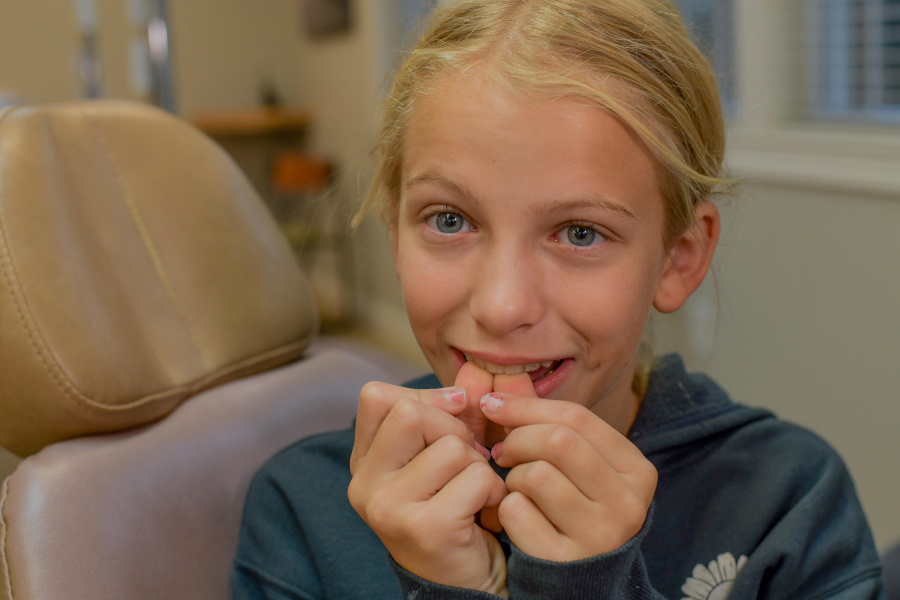
Not every thumb sucker needs an orthodontic intervention. If your toddler is still sucking their thumb, that’s developmentally normal.
But if the habit persists past a certain point, it’s worth getting a professional opinion — especially if you’re already noticing signs of thumb sucking damage to teeth like flared front teeth or changes in your child’s bite.
Here’s a general timeline that Cincinnati parents find helpful:
Ages 2–4: Most kids naturally stop on their own. No need to stress yet.
Ages 4–5: If the habit is frequent and intense, it’s a good idea to start encouraging your child to stop with positive reinforcement — praise, reward systems, gentle conversations about why it matters.
Age 5–6: If home strategies haven’t worked, it’s time to talk to an orthodontist. The permanent front teeth are on their way in, and this is when the habit can start doing real damage.
Age 7+: The American Association of Orthodontists recommends every child get an orthodontic evaluation by age seven. If your child is still thumb sucking at this point, early intervention with a habit appliance can prevent more complex treatment down the road.
Dr. Haverkos takes a conservative, no-pressure approach to these conversations. If your child doesn’t actually need an appliance yet, he’ll tell you that. And if they do, he’ll explain exactly why and walk you through every step before anything happens.
When to Act: A Quick Reference for Cincinnati Parents
| Your Child’s Age | What’s Happening | What to Do |
| Under 3 | Thumb sucking is completely normal and developmentally appropriate | Nothing — let them self-soothe |
| Ages 3–4 | Most kids naturally stop on their own around this time | Gentle encouragement if the habit is frequent, but no need to stress |
| Ages 4–5 | Permanent teeth are getting closer; prolonged habits can start affecting jaw growth | Try positive reinforcement — reward charts, praise, gentle conversations |
| Ages 5–6 | Permanent front teeth are erupting; thumb sucking can now cause real alignment changes | If home strategies haven’t worked, schedule a free evaluation with Dr. Haverkos |
| Age 7+ | The AAO recommends an orthodontic evaluation by age 7; the habit may already be affecting teeth and jaw | Don’t wait — a habit appliance can prevent more complex (and costly) treatment later |
Every child is different, and this table is a general guide. If you’re unsure where your child falls, a quick conversation with our team can give you clarity. The evaluation is free, and there’s never any pressure.
What Happens If Thumb Sucking Doesn’t Stop?
This isn’t about scaring anyone — but it’s important for Cincinnati parents to understand what prolonged thumb sucking can actually do to a child’s developing mouth. Here’s what we commonly see:
Open bite
The upper and lower front teeth don’t touch when the mouth is closed, making it hard to bite into foods like sandwiches or apples. An open bite won’t correct itself once permanent teeth are involved.
Overbite or flared upper teeth
The thumb pushes the upper front teeth forward, creating what some people call “buck teeth.” This increases the risk of dental trauma (think: a stray ball at recess or a fall on the playground) and often requires overbite correction later. In some cases, the pressure can also contribute to underbite development as the jaw relationship shifts.
Narrow upper jaw
Constant pressure from the thumb can actually reshape the roof of the mouth, making the upper jaw too narrow. This can lead to crossbite issues and crowded teeth as permanent teeth try to come in without enough space.
Speech difficulties
Kids who thumb suck past the age when their permanent teeth erupt sometimes develop lisps or difficulty pronouncing certain sounds clearly — particularly “s” and “z” sounds.
Confidence and social challenges
This one doesn’t get talked about enough. Older kids who still thumb suck may get teased by classmates, which can seriously impact their self-esteem during already-tricky social years.
The encouraging part? Catching these issues early — ideally before they fully develop — means simpler, shorter, and less expensive treatment. That’s exactly what habit appliances are designed to do.
How Habit Appliances Work at Haverkos Family Orthodontics
When you bring your child to either our Bridgetown or Harrison office for a thumb sucking concern, here’s what the process actually looks like:
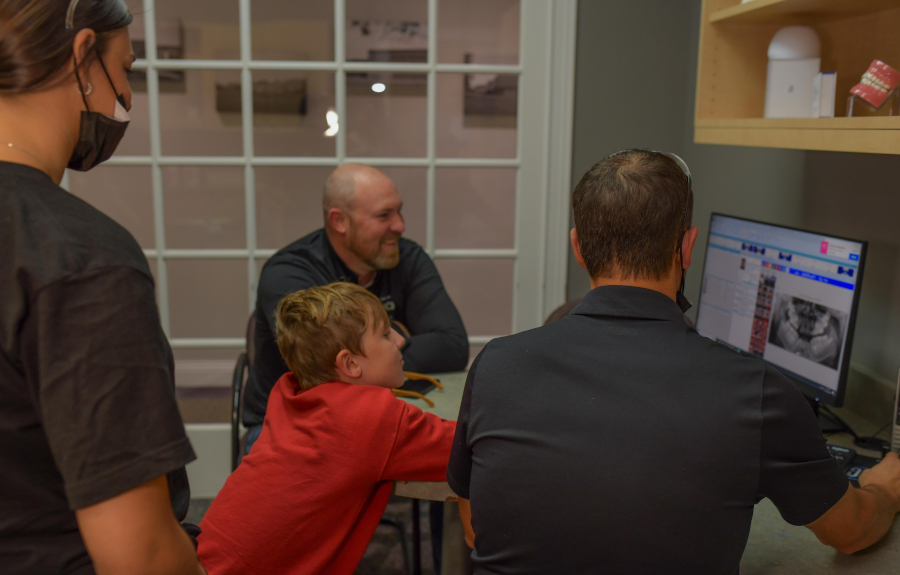
Step 1: A No-Pressure Evaluation
Your child’s first visit starts with getting to know each other. Dr. Haverkos and our team will take digital X-rays and photos to see exactly what’s happening with your child’s teeth, jaw, and bite development. We’ll talk with you about the habit — how long it’s been going on, when it happens most, and what you’ve already tried at home.
If a habit appliance isn’t necessary yet, we’ll tell you. Sometimes a combination of behavioral strategies and monitoring is all that’s needed. But if the habit is already affecting your child’s dental development, we’ll recommend the right type of appliance and explain exactly how it works.
Step 2: Custom Appliance Design
Using our iTero digital scanner (no messy impressions — just a quick, comfortable scan), we create a precise 3D model of your child’s mouth. With our in-house 3D printing lab, we can design and fabricate a custom habit appliance that fits your child perfectly.
This technology means faster turnaround, better fit, and a more comfortable experience for your kid.
Step 3: Placing the Appliance
Placing the habit appliance is completely painless. It’s bonded to the upper back molars with dental adhesive — similar to how braces brackets are attached. The whole process takes about 15–20 minutes, and your child can go right back to school or activities afterward.
We’ll walk both you and your child through how the appliance works, what to expect the first few days, and how to keep it clean.
Step 4: The Adjustment Period
The first couple of days are the biggest adjustment. Your child’s tongue will need to get used to sharing space with the appliance, and there may be some minor soreness around the back teeth. Some kids have slight speech changes for a day or two — this goes away quickly as they adapt.
Here’s the part that surprises most parents: the thumb sucking often stops almost immediately. Once the appliance removes the satisfying feeling of pressing against the palate, most kids simply stop trying.
Since thumb sucking is often a comfort mechanism, your child might need a little extra attention during the transition — especially at bedtime. Extra cuddles, a new bedtime routine, or a comforting activity can go a long way.
Step 5: Monitoring and Removal
We’ll schedule follow-up visits at our Bridgetown or Harrison office every four to six weeks to check on progress. Once Dr. Haverkos confirms the habit is fully broken (typically after three to six months for most kids), the appliance is removed — quickly and painlessly.
In some cases, the appliance can also help minor tooth alignment improvements happen naturally once the thumb pressure is gone. If additional orthodontic treatment is needed down the road, options like Invisalign or braces can finish the job.
Types of Habit Appliances We Offer
Not every habit is the same, and Dr. Haverkos customizes the approach based on your child’s specific situation:
Fixed palatal crib: The most common option. Thin metal wires create a small barrier behind the upper front teeth, preventing the thumb from making contact with the palate. It’s the go-to choice for most thumb sucking cases and works well for tongue thrusting too.
Bluegrass appliance: Features a small spinning roller instead of a crib. Some children respond better to this design because it gives them something to do with their tongue — offering an alternative behavior rather than just blocking the old one.
Combination appliance: In cases where a child also has a narrow upper jaw, Dr. Haverkos may combine a habit appliance with a palatal expander. This addresses both the habit and the structural changes it’s already caused in a single phase of treatment — saving time, appointments, and money for Cincinnati families.
During your child’s evaluation, Dr. Haverkos will recommend the best option and explain why. There’s no one-size-fits-all approach here. Have more general questions about orthodontic treatment?
Check out our frequently asked questions for quick answers.
Habit Appliances Aren’t Just for Thumb Sucking
While thumb sucking gets the most attention, habit appliances can also address other persistent child oral habits that affect dental development:
Finger sucking
Whether it’s the index finger, two fingers, or any combination — the same appliance approach works.
Tongue thrusting
Some children push their tongue against their front teeth every time they swallow, which can cause open bites and other alignment issues over time. A tongue crib or similar appliance helps retrain the tongue to rest in the correct position.
Prolonged pacifier use
If your child has transitioned from a pacifier to their thumb (which happens more often than you’d think), a habit appliance can break the cycle.
If you’re not sure whether your child’s habit warrants a visit, give us a call — our team is happy to chat about your situation and let you know if an evaluation makes sense.
Real Cincinnati Families, Real Results
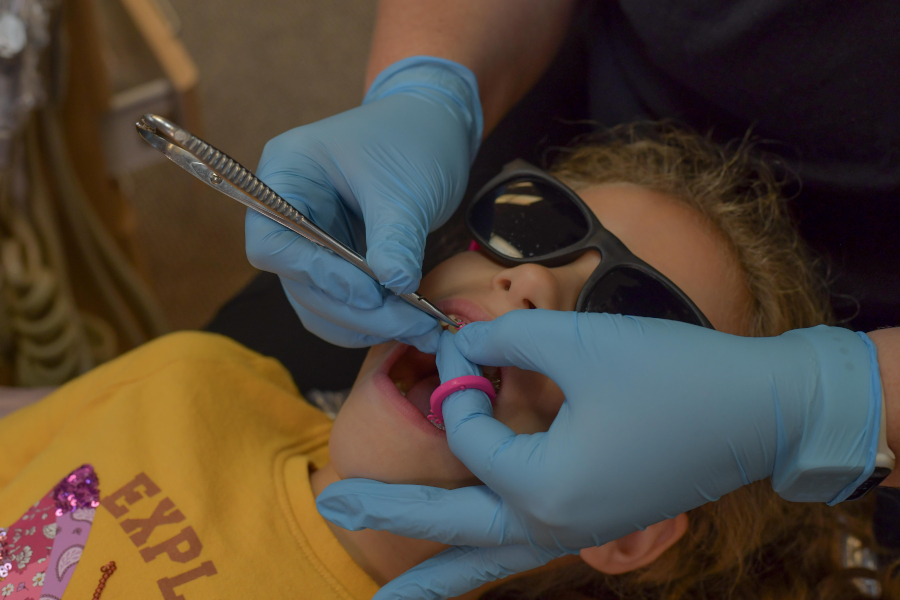
Don’t just take our word for it. Here’s what one West Side parent shared about their experience with thumb sucking treatment at our office:
“I can’t speak highly enough of the service that we are receiving from Dr. Haverkos. He and his staff are always so kind and friendly and always concerned about the person’s well-being. He is currently treating my son for a thumb sucking habit and it is working well.” — Michelle T.
This is exactly the kind of outcome we see regularly. Parents come in worried, kids leave with healthier habits, and the whole family feels good about the experience.
With over 1,100 five-star Google reviews from Cincinnati families, stories like Michelle’s are the norm — not the exception.
Why Cincinnati Parents Choose Haverkos for Habit Appliances
When it comes to your child’s developing smile, you want a West Side Cincinnati orthodontist for kids who actually specializes in this stuff — not a general dentist who occasionally handles orthodontic cases. Here’s what sets our approach apart — and why Cincinnati families have voted us the best orthodontist in the city:
Board-certified orthodontist
Dr. Haverkos completed specialty training in orthodontics and dentofacial orthopedics at Virginia Commonwealth University, including work with children at the Craniofacial Center at Children’s Hospital of Richmond. He passed his American Board of Orthodontics exam — a credential fewer than 60% of orthodontists hold. When your child’s jaw development is on the line, that expertise matters.
Kid-friendly environment
Our offices aren’t cold, clinical spaces that make kids nervous. We’ve created an atmosphere where children actually feel comfortable — and sometimes even excited — about their visits. That makes a huge difference when you’re asking a young child to wear an appliance in their mouth for several months.
Advanced technology
With iTero digital scanning (no gooey impressions), in-house 3D printing, and digital X-rays with reduced radiation, we use the latest tools to make treatment more precise, more comfortable, and faster for your child.
Conservative approach
Dr. Haverkos doesn’t recommend treatment your child doesn’t need. If behavioral strategies are still worth trying, he’ll say so. If an appliance is the right call, he’ll explain exactly why. You’ll never feel pressured into anything. And if you’ve already seen another provider and aren’t sure about their recommendation, we’re happy to offer a free second opinion.
Two convenient locations
Whether you’re in Bridgetown, Harrison, Delhi, Green Township, Colerain, or anywhere on Cincinnati’s West Side, we have an office close to you with scheduling that works around school hours.
What Cincinnati Parents Ask About Habit Appliances
At what age should my child see an orthodontist about thumb sucking?
The American Association of Orthodontists recommends an orthodontic evaluation by age seven. But if your child is still actively thumb sucking at age five or six and home strategies aren’t working, don’t wait — schedule a consultation sooner. Catching problems early often means simpler solutions.
Does the habit appliance hurt?
No. Placing the appliance is painless, and wearing it doesn’t cause ongoing discomfort. Some children experience minor soreness around the back teeth for a day or two, and the tongue may take a few days to adjust to the new sensation. But pain isn’t part of the equation.
How long does my child need to wear the habit appliance?
Most children wear the appliance for three to six months. For more severe or persistent habits, it might stay in a bit longer — up to nine to twelve months in rare cases. Dr. Haverkos monitors progress at regular check-ups and removes the appliance as soon as the habit is confidently broken.
Will the appliance affect my child’s speech?
Some children notice a slight change in speech for the first day or two as their tongue adjusts. This resolves quickly. By the end of the first week, most kids are speaking completely normally.
Can my child eat normally with a habit appliance?
Yes — with a few common-sense adjustments. We recommend avoiding extremely sticky or hard foods (similar to braces care guidelines) to protect the appliance. But regular meals, snacks, and school lunches are all fine.
What if my child’s teeth are already affected by thumb sucking?
If thumb sucking has already caused alignment issues like an open bite, overbite, or narrow jaw, Dr. Haverkos can create a comprehensive treatment plan that addresses both the habit and any existing orthodontic concerns. In some cases, a habit appliance combined with a palatal expander can tackle both problems simultaneously. For older children, braces or other orthodontic treatment may be recommended after the habit is broken. Adults who never addressed childhood thumb sucking damage can still get great results — our adult braces options are designed to fit into busy professional lives. For particularly complex cases, Dr. Haverkos has the specialized training to handle whatever your child’s smile needs.
How much does a habit appliance cost?
The cost depends on the type of appliance and your child’s specific treatment needs. At Haverkos Family Orthodontics, we provide a detailed breakdown of all fees during your consultation — before any treatment begins. We offer flexible in-house financing, accept third-party financing through CareCredit, and work with almost all insurances. Many dental insurance plans with orthodontic benefits will cover a portion of the cost. Our team will verify your coverage and help you maximize your benefits. For a closer look at how we make treatment affordable, check out our guide to orthodontic costs in Cincinnati.
My child sucks their fingers instead of their thumb — does that matter?
Same idea, same solution. Whether your child sucks their thumb, index finger, or multiple fingers, the habit appliance works the same way by removing the satisfying contact with the roof of the mouth.
Can you help with tongue thrusting too?
Absolutely. Tongue thrusting — where a child pushes their tongue forward against the front teeth when swallowing — can cause many of the same orthodontic issues as thumb sucking. A modified habit appliance (tongue crib) helps retrain the tongue to rest and swallow in the correct position.
Getting Started Is Simple
Taking the first step toward breaking your child’s thumb sucking habit doesn’t have to be complicated. Here’s how it works:
- Call us or fill out our online form to schedule a free evaluation at either our Bridgetown or Harrison office.
- Bring your child in for a relaxed, no-pressure visit. We’ll do a thorough evaluation and talk through everything together.
- Get a clear recommendation and treatment plan — including costs, timeline, and what to expect.
- Start treatment when you’re ready. No pressure, no rush.
Most parents tell us they wish they’d come in sooner. The evaluation is free, and even if your child doesn’t need an appliance right now, you’ll leave with peace of mind and a plan.
Two Convenient Cincinnati Locations
Bridgetown Office
Haverkos Family Orthodontics
5754 Bridgetown Rd, Cincinnati, OH 45248
Phone: (513) 481-8000
Hours: Monday: 7:30am – 4:30pm
Tuesday (school year): 12:00pm – 5:30pm
Tuesday (summer): 8:00am – 2:00pm
Wednesday – Thursday: 7:30am – 4:30pm
Friday: 10:00am – 2:00pm
Saturday – Sunday: Closed
Harrison Office
Haverkos Family Orthodontics
9717 Dry Fork Rd, Harrison, OH 45030
Phone: (513) 481-8000
We serve families from throughout Cincinnati’s West Side, including Bridgetown, Harrison, Delhi, Green Township, Colerain, Westwood, and the surrounding communities. With early morning appointments, extended Tuesday hours during the school year, and two locations to choose from, fitting your child’s orthodontic care into your schedule has never been easier.
Connect With Us
Follow us on social media to see more smile transformations and stay updated on the latest from Haverkos Family Orthodontics: